
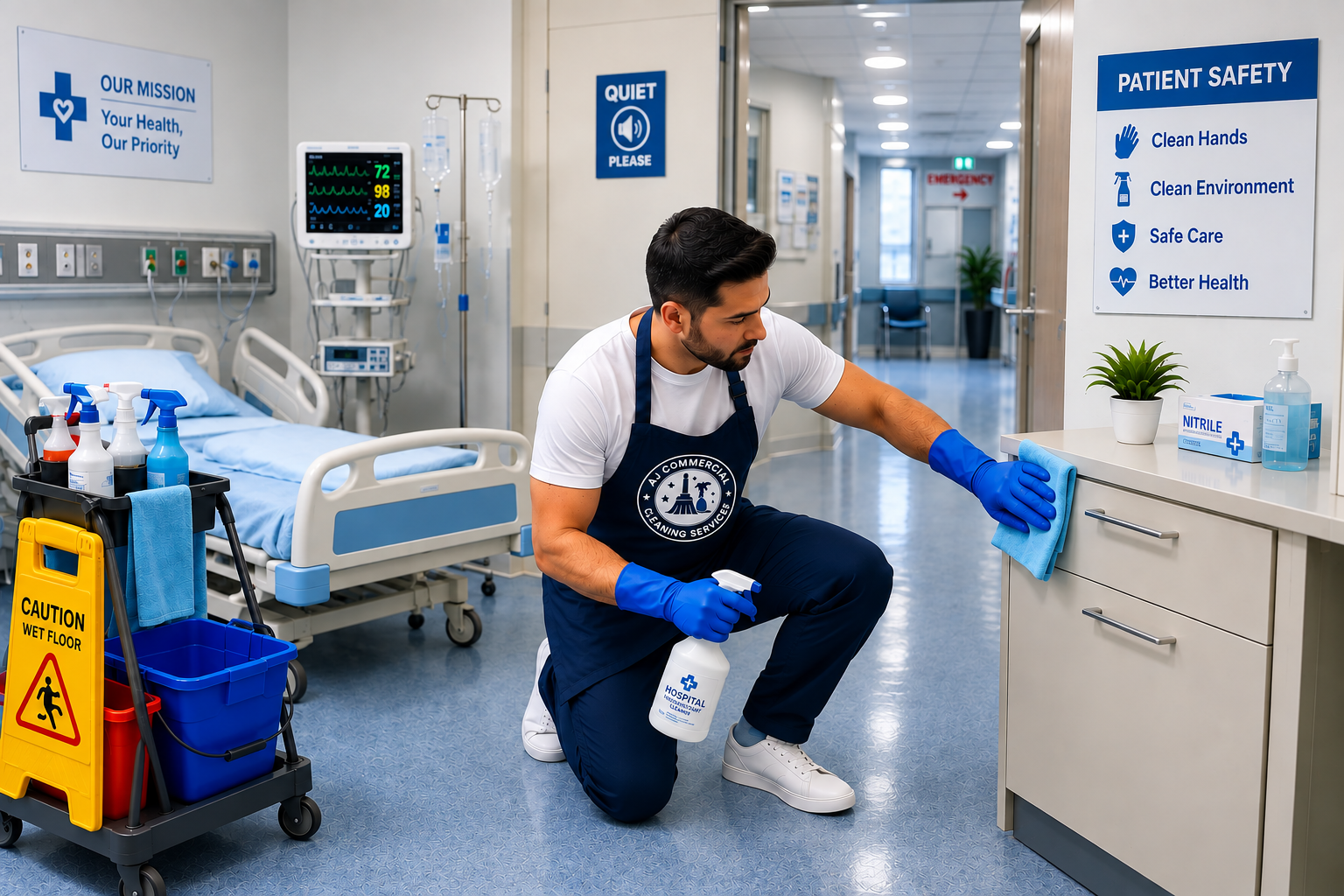
Clinical cleaning is a process, not an effort level
The difference between commercial and clinical cleaning is not stronger chemicals or more time. It is that the sequence is specified, the products are specified, and the result is recorded — so that "it looks clean" is never the standard being met.
Cleaning and disinfection are two separate steps in that sequence and they are not interchangeable. Cleaning physically removes soil and organic matter with detergent and mechanical action; disinfection reduces what remains on an already-clean surface. Disinfectant applied to a soiled surface is largely wasted, because organic matter interferes with the chemistry. Every product also has a manufacturer-specified contact time, and a surface wiped dry immediately has not been disinfected.
Cross-contamination control
Colour-coded cloths and equipment exist so that a cloth used in a washroom cannot reach a treatment surface. What matters is less which colour scheme a practice uses than that one exists, that it is written down rather than remembered, and that staff are trained to it.
The same logic drives the order of work: clean areas before dirty ones, high surfaces before low, and treatment rooms before amenities. On sites where it applies we work to the practice’s own infection control policy rather than imposing a generic one, because your requirements are set by your accreditation and by NSW Health, not by your cleaning contractor.
Sites we clean across Sydney
Waiting rooms and reception carry a different risk profile to treatment rooms and are scoped separately — high-touch points, chairs, toys and magazines, door furniture and EFTPOS terminals get attention that an ordinary office clean would not give them.
- General practice and bulk-billing medical centres
- Dental surgeries and orthodontic practices
- Allied health — physiotherapy, podiatry, psychology, radiology
- Specialist consulting suites
- Day surgeries and procedure rooms
- Pathology collection centres and pharmacies
Records, waste and scheduling
Each visit is logged against the agreed scope, which matters more in a clinical setting than anywhere else: accreditation surveys ask what was done and how you know. A per-visit record answers that question with a date rather than a recollection.
Clinical and sharps waste remains the practice’s responsibility under its own licensed waste contract; we work around those streams and handle general and recycling waste. Cleans are scheduled around consulting hours — most commonly after the last patient, or before the first.